

Case studies · Győr and across Hungary
Project examples and the thinking behind them
Working scenarios from performance marketing, SEO, social, and brand projects — what the situation was, what we changed, and what the result looked like.
Czuczor Gergely utca 18, 9021 Győr
What you are reading
How to read these examples
This page describes the kinds of problems we take on and how we approach them. The examples below are written as working scenarios based on typical engagements: what the situation was, what we changed, and what the result looked like.
We describe them this way because specific numbers from client accounts belong to those clients. What we can share is method and reasoning, which is what usually helps a prospective client judge fit.
Every example follows the same shape
- The situation as the client described it.
- The constraint the project had to work around — often the most informative part.
- What we changed, and what changed afterwards.
Use them to check whether your own situation resembles one of these. If it does, a first call will be productive. If none of them do, that is also useful information, and we would rather you knew it before spending time on a proposal.
Regional B2B supplier, lead quality problem
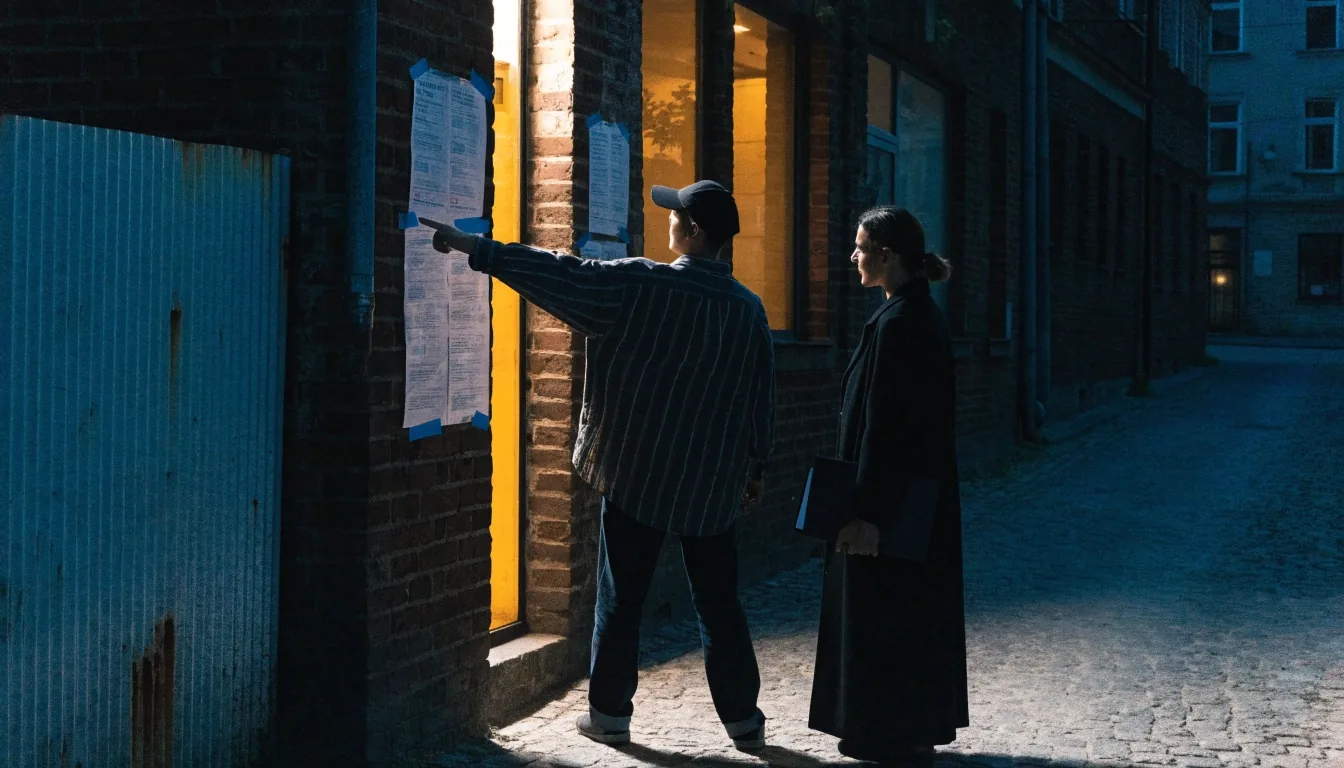
A manufacturing supplier near Győr
Paid search · Lead qualification · B2B
The situation and the constraint
The company was generating enquiries through paid search, but the sales team reported that most leads were unsuitable: too small, wrong industry, or simply price-shopping. The constraint was that the budget was not the bottleneck — the mix of people arriving was.
We did not increase the budget. Instead we rebuilt the keyword structure around industry terms rather than generic product terms, rewrote the ad copy to state the minimum order context, and added a qualifying question to the landing-page form.
What changed
Enquiry volume dropped. Lead quality rose, and the sales team stopped treating marketing leads as a nuisance.
The lesson was that more traffic was never the problem.
Local service business
Invisible in the searches that mattered locally
A regional service company ranked poorly for the searches that mattered locally and relied entirely on paid ads, which got more expensive every year. That dependence was the constraint: nothing could be switched off while something else was built.
The project combined technical fixes, location pages for the towns it served, and a small content cluster answering common customer questions. Paid search stayed running while organic built up.
Over several months the organic share of enquiries grew, which reduced the pressure on the ad budget. Nobody switched anything off; the mix simply became less fragile.

Consumer brand, creative fatigue
An online retailer had been running the same ad creative for a long time. Performance had declined gradually, and the assumption inside the company was that the market had gotten harder.

We tested a set of new concepts against the incumbent, with the same audiences and budget. The decline was mostly creative fatigue, not market conditions. The fix was not a bigger budget but a production rhythm: a scheduled refresh of assets before performance started to slip, rather than after. That rhythm is now part of how the account is planned each quarter, so the question is when to replace a concept, not whether.
Recruitment advertising in a tight labor market
The constraint
A company in the Győr industrial region needed skilled workers and was competing for the same candidates as several larger employers nearby. Recruitment advertising works differently from product marketing.
- The audience is narrow.
- The message has to address pay, shifts, and location honestly.
- The application process has to be short.
What we did
We rebuilt the campaign around those constraints and treated the careers page as the landing page it actually is. The engagement was measured on qualified applications, not clicks. Nothing in the campaign promises more than the role delivers, which is the part that keeps applications real rather than numerous.

Cross-border campaign
A Hungarian exporter selling into Austria and Slovakia
The assumption we did not take
The client wanted to reuse its Hungarian campaigns for both markets. The assumption was that translation would be enough. It rarely is: search terms, platform behavior, and buyer expectations differ by market, so we rebuilt the campaigns for each country rather than translating. The Hungarian version kept running separately, unchanged.
What to budget for
This kind of project takes longer to plan than a domestic campaign, and budgeting for that planning time is part of getting it right. The extra weeks go into research and setup, not into media spend, so the cost of planning is visible before anything is switched on.

What these examples have in common
None of them were solved by spending more. In each case the first move was to find out what was actually broken: lead quality, visibility, creative, audience definition, or market fit.
That is the pattern we look for in every new engagement. It also explains why we ask a lot of questions before proposing anything. An agency that recommends a channel before understanding the problem is selling a service, not solving one.
Where to look first
- Lead quality, not lead volume.
- Visibility in the searches that matter locally.
- Whether the creative has gone stale.
- Whether the audience is defined correctly.
- Whether the market itself has shifted.
When we are not the right fit
Saying no early is cheaper for everyone than discovering the mismatch mid-project. These are the situations where we will tell you so plainly.
Which projects do we typically decline?
If a project needs large-scale video production, a full rebrand with extensive design systems, or a fixed volume of content with no measurement attached, we are probably not the best choice and will say so. That is not a judgment on the work — it is simply a different kind of studio.
What if the budget cannot support a meaningful test?
We decline work where the budget cannot support a meaningful test of the channel being requested. In those cases we suggest a smaller scope, a different channel, or waiting until the budget is available. Declining is uncomfortable, but taking on work that cannot succeed is worse for everyone.
What happens in a first conversation?
We ask questions before proposing anything: what the current setup is, what has been tried, how leads or applications are actually judged, and what a reasonable result would look like. If your situation resembles one of the scenarios above, that conversation will be productive. If it does not, you will hear that early.
Recognise your own situation in one of these?
Tell us what is happening in your account and what you have already tried. We will say plainly whether it is something we can help with, and what the first step would look like if it is.
The studio
Napfény DigitalCzuczor Gergely utca 18
9021 Győr, Hungary